
Blog: Innovations & Insights
April 2026
Harder Isn’t Always Stronger: The Truth About Tungsten Carbide
Hardness and strength sound like synonyms until the first brittle blade shatters mid-production. That expensive carbide knife measuring 94 HRA—harder than almost anything in the facility—lies in pieces after hitting contamination that softer steel might have survived. The assumption that harder automatically means better has cost operations serious money in shattered blades, damaged equipment, and emergency downtime.
Tungsten carbide delivers extraordinary performance when properly understood and applied, but treating hardness as the only metric that matters guarantees expensive disappointments. The real story behind these materials requires separating hardness from strength, understanding why they differ, and learning when each property actually determines success.
Hardness Versus Strength Explained
These properties measure completely different things yet get confused constantly. Hardness measures resistance to surface deformation—how well material resists scratching or indentation. Strength measures resistance to fracture under load—how much force material withstands before breaking.
Diamond demonstrates the distinction perfectly. The hardest natural material shatters with a hammer blow. The hardness that makes it excellent for cutting becomes irrelevant when impact strength determines survival. Industrial applications encounter similar situations constantly. Carbide blades processing clean materials in controlled conditions perform beautifully. The same blades hitting unexpected contamination might fail where tougher materials would survive.
Tool steel illustrates the opposite extreme. Properly tempered steel at 58 HRC is significantly softer than tungsten carbide yet withstands impact loads that would fracture carbide. The toughness—ability to absorb energy without fracturing—exceeds carbide despite inferior hardness. Applications involving heavy impact favor this toughness even when it costs wear resistance.
Understanding this distinction transforms material selection from guesswork into engineering. The question isn’t which material is “better” but which property—hardness or strength—determines success in your specific application.
Where Tungsten Carbide Actually Excels
Tungsten carbide blades deliver exceptional performance when wear resistance determines blade life and impact loads stay within manageable limits. These conditions appear more often than not in industrial cutting.
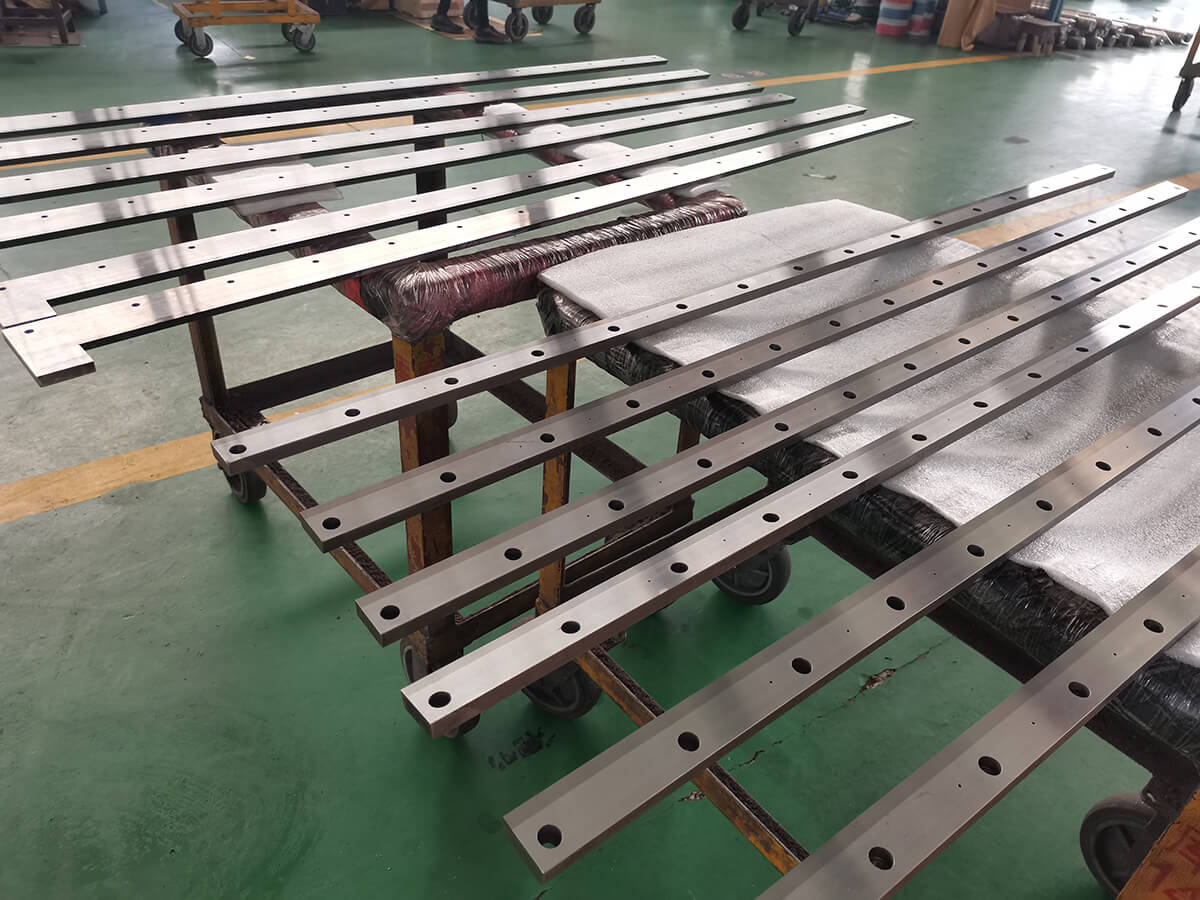
Sheeting knives represent ideal tungsten carbide applications. Cutting continuous polymer sheets involves consistent loads without significant impacts. The extreme hardness maintains sharp edges through millions of cycles that would round steel edges in hours. Clean material means no contamination creating impact events. The application matches material properties perfectly.
High-speed continuous cutting similarly favors carbide blades. Consistent polymer strands, constant speeds, and predictable loads create conditions where hardness dominates performance. The wear resistance that seems excessive for occasional cutting becomes essential when blades operate 24 hours continuously.
Abrasive material processing showcases tungsten carbide advantages dramatically. Glass-filled polymers, mineral-loaded compounds, and fiber-reinforced materials act like grinding compounds that destroy steel edges quickly. Carbide knives processing these materials last 10 times longer or more. The hardness that doesn’t matter for soft materials becomes critical with abrasives.
The common thread: applications where consistent conditions allow hardness advantages without creating impact failures. When your operation fits this profile, tungsten carbide delivers exactly what it promises.
Where the Story Gets Complicated
Contaminated materials challenge the hardness-equals-performance assumption. Recycling applications, post-consumer waste processing, and operations with inconsistent feedstock introduce impact events that change the equation dramatically.
A carbide knife at 94 HRA hitting a metal fragment faces a different challenge than cutting polymer. The impact energy has nowhere to go—hard materials can’t deform to absorb it. Cracks propagate through the rigid structure faster than in tougher materials. The blade designed for wear resistance fails through fracture instead.
This isn’t a material defect—it’s a property mismatch. The same hardness preventing abrasive wear prevents the deformation that absorbs impact energy. Physical properties don’t make exceptions based on what you need in the moment.
Heavy intermittent cutting creates similar challenges. Operations starting and stopping frequently, processing variable thickness sections, or handling materials with embedded hard spots all create impact loads that favor toughness over hardness. Carbide blades might outlast steel in wear testing while failing faster in actual service due to impact conditions the tests didn’t capture.
The Composite Solution
Modern tungsten carbide addresses the hardness-strength trade-off through a composite structure rather than compromising either property. Tungsten carbide grains suspended in cobalt metal binder deliver both properties without fully sacrificing either.
The carbide grains provide the hardness—92-95 HRA performance that maintains edges against abrasion. The cobalt matrix provides toughness – a metallic binder that absorbs energy and prevents crack propagation. The combination outperforms either component alone.
Grain size and binder percentage control the balance. Smaller grains with more cobalt favor toughness for impact-prone applications. Larger grains with less cobalt favor hardness for pure abrasion resistance. This tunability allows carbide knives optimized for specific applications rather than generic compromises.
Premium sheeting knives use carefully optimized compositions—enough cobalt for processing variations while maintaining hardness for extended edge life. This optimization requires understanding your application well enough to specify appropriate compositions rather than accepting generic “tungsten carbide” without specification detail.
Practical Selection Guidance
Matching material to application requires an honest assessment of actual conditions. Laboratory hardness numbers matter less than understanding what determines blade life in your operation.
If blades consistently wear from abrasion—edges rounding from continuous contact with abrasive materials—tungsten carbide blades address the actual failure mode. The hardness that prevents abrasive wear solves your real problem.
If blades consistently fail from chipping or fracture—edges breaking from impacts rather than wearing away—evaluate whether carbide grades with higher cobalt content or alternative materials better match your conditions. Harder isn’t helping when fracture determines blade life.
Most operations experience both modes depending on conditions. This reality explains why carbide blade selection requires application analysis rather than defaulting to maximum hardness. The hardest available option might underperform a slightly softer, tougher alternative that better matches actual failure modes.
Tungsten carbide delivers exceptional performance when properly applied. The keyword is properly. Understanding the hardness-strength distinction, matching composite composition to application requirements, and selecting based on actual failure modes rather than impressive hardness numbers transforms carbide from occasionally disappointing to consistently excellent.